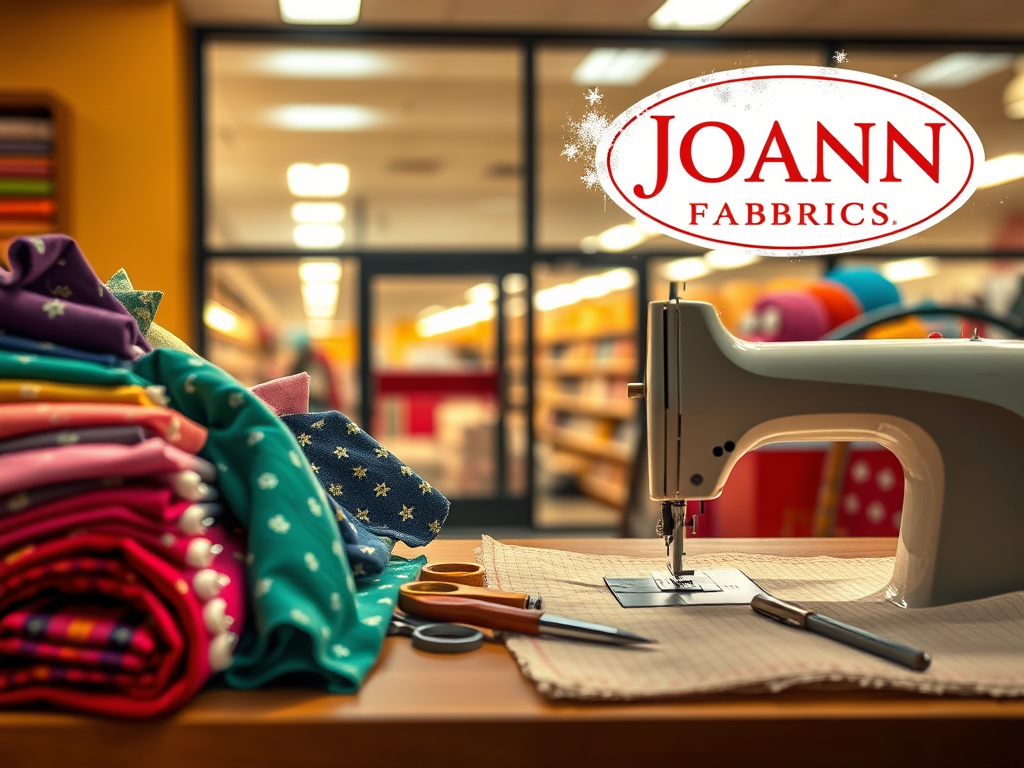
In wake of its untimely demise, Joann refuses to take accountability for its double bankruptcy

Joann Fabrics, 82, passed away in the early morning hours of February 15th, 2025 in her home town of Hudson, Ohio. The long beloved retailer of fabric and craft supplies suffered a painful battle with bankruptcy beginning in April of 2024. After a relapse of this bankruptcy in early 2025, Joann was sadly unable to win her brave fight. She is survived by countless dedicated admirers across the United States as well as lifelong arch nemeses Michael (of Michael’s Stores) and Hobby (of the self-named Lobby). Her dedicated sacrifices shall not be forgotten, as Miss Fabrics will be honored in a memorial at the end of the year. Though there are no concrete plans, Joann Fabrics’ live-broadcast funeral is expected to draw millions of viewers.
It is a well known fact among crafters, sewers especially, that Joann is the preferred supplier of garment fabrics, fleece, and notions. Unparalleled variety and a moderately high standard of quality are exactly what sets this store apart from its lackluster competitors…unlike, say, Walmart.
But if that were truly the case, wouldn’t the company still be in business?
Myth: Young People Don’t Sew
Joann Fabrics hasn’t seen positive growth since 2021, likely due to Covid-related increases and later associated decreases in solitary, indoor hobbies like crafting and sewing. Since then, the company has fallen, losing over $21million from July to September, 2024. In those three months alone, the company’s total sales fell more than 4%.
Many are flooding crafting social media communities blaming younger generations–and their lack of ambition–for Joann’s untimely demise. Most often, these individuals link the fall of this business with a supposed “lack of interest” in crafting and sewing among all people below retirement age.
In theory, that could make sense: young people have no interest in sewing and buying fabric, which leads to a decrease in sales as many sewists grow in age and retire from the hobby completely. While this might be a reasonable conclusion to make, it is unfortunately completely false.
Home sewing and crafting is growing in interest among people of all ages, including those in younger generations. The home sewing machine industry is projected to continue growing through 2033, according to Verified Market Reports. By 2033, the demand for domestic sewing machines is expected to rise from $3.5 billion in 2023 to $5.8 billion in 2033. This data only considers people who are buying sewing machines, not people who already have them. This means that experienced seamsters, those we can assume already own and use their sewing machines, aren’t even included in this radical growth projection.
Looking beyond sewing machines, the demand for craft kits of all kinds is also projected to grow, especially in adult craft kits. By 2031, sales of craft kits–packs of supplies and instructions designed to guide the maker through all stages of the project–are predicted to nearly double. With current sales skyrocketing, this industry is expected to reach over $70billion worldwide in just six years.
Last week, I presented at a youth leadership conference about clothing manufacturing both for fun and professionally as a career. During my presentation, I was met with nearly a hundred sets of gen alpha eyes ready to learn about what transforms a design into a real, wearable item of clothing. The amount of phones I saw on desks was easily fewer than ten, and I was met with active, eager participation during the entire 30-minute lesson. When asked how many students had used a sewing machine, a large majority of participants raised their hands.
By the end of my presentation, students were engaged and thinking about the topic enough to ask detailed questions about sewing. Between that and my experiences as a youth sewing instructor (my youngest student was 9), I can assure you that the desire to sew definitely still lives on in the younger generations.
The most likely reason for this increase in demand can be very confidently linked to both an interest as well as a need for sustainability in the modern age. Sustainability and the demand for sustainable products has grown more than 200% in 2024 alone. With increased awareness of the horrors associated with mass-manufacturing, there is a large push toward making things yourself or altering what you already have to fit ever-changing trends. That and, of course, the incredible lack of quality present in most clothing retailers today (Yes, this is absolutely a Shein call-out — and I stand by it.)
Further, the demand for craft kits and DIY projects is projected to grow by more than double in the next ten years. People are, indeed, continuing to learn and show interest in crafts, sewing, and DIY.
If a lack of demand can’t be the root cause of Joann’s loss in sales, then what truly led to its downfall?
The answer is simple: Joann was a poorly run business.
Joann Joins the Blockbuster Club
While it’s easy to fall into the existential trap of blaming consumers for a business’s poor performance, this simply is not true. Joann has fallen to the wayside like Limited Too, Delia’s, and Blockbuster strictly through its own doing.
Through rose-colored glasses, people view beloved fallen businesses with adoration. In the public search for a scapegoat, blame is usually placed on the individual. “We don’t appreciate analog technology anymore,” they say, “isn’t it sad?”
Rather than blame the all-knowing corporate machine for these stark developments in technology, individuals blame the consumer. Instead of considering how we physically have no means of playing a DVD on modern computers, haters focus on the fact that people were ~too lazy~ to go all the way to Blockbuster.
Similarly, people focus on the younger generations for the death of handmade garments…not the fact that a t-shirt only costs $5 on Shein and I’d never, ever be able to make one for less. Low labor costs and poor conditions promote cheap garments and de-influence the making of one’s own clothes.
Now that it’s leaving our lives, all we choose to remember is what we loved (or still love) about Joann Fabrics. The common sentiment of, “people just don’t value in-person shopping anymore,” is often the nostalgic explanation people land on when companies like this close their doors.
The Real Problem: Internal Mismanagement
As for the business itself, Joann Fabrics can be found blaming “inventory issues” for its recent decline in sales. I’m not going to expose my spending history, but I will say that I have never, ever left Joann empty handed. I have also never seen a Joann with empty shelves. Many sewists will agree with me on that sentiment, since Joann is widely regarded and well known for its variety and selection.
On October 23rd of 2024, Joann put out a press release stating “Joann Enters Another Handmade Holiday Season With Expanded Inventory”. If the company faced inventory issues so harmful that they literally closed down for good, why would their press release boast added inventory and larger selections as late as October?
“The company has also completed an expansion of their category leading yarn assortment, expanding brands, project choices and inventory levels across the country.”
– Joann October 23rd Press Release
What’s more, inventory and supply chain disruptions reached their peak in the early years of the 2020s as a result of continued Covid-19 lock downs and those lasting effects. During the most volatile period for supply chain delays, Joann Fabrics experienced their largest year of growth in the past ten years.
Their resilience and adaptability during the pandemic should have prepared the company for any future inventory issues. That is, of course, only if they continued to prepare for these kinds of risk.
The expansive growth Joann experienced in 2021 followed by their inability to maintain that growth suggests a reactive supply chain strategy. Because they were not forced to adapt to genuine supply chain disruptions as a result of the pandemic, they were likely scrambling to cope with the lasting effects the pandemic had on the supply chain after their 2021 growth period diminished.
While 60% of companies have reported intentional improvements to their supply chain and inventory plans in the aftermath of Covid, Joann proved to only worsen their supplier relationships by blaming their suppliers for the company’s reported “inventory issues”.
The real source of the problem can be attributed to poor business practices and immature operations strategy following their first bankruptcy in April of 2024. Directly following this declared bankruptcy, Joann began sending updated offers to their suppliers for far less than their agreed upon contract prices.
It has been reported that the company offered a supplier of quilt kits 75% of the agreed upon price for three months of product. In other words, Joann wanted to pay just 75% of what they owed to a supplier that already had three months of inventory on hold for them.
The “inventory delays” claimed by Joann cannot be attributed to the supplier when Joann is directly breaking a contract agreement and expecting 25% discounts on debts already owed. Negotiations for something like this could delay shipment for months until an agreement is reached. Negotiations that were, in fact, initiated by Joann. Not only does this mentality strain supplier relationships, but it also took Joann further away from the growing market of craft kits, as previously mentioned.
Another factor Joann blames for its downfall is the overall shift away from brick and mortar shopping. With more and more people opting for online shopping, there has been a decrease in in-person shopping. That much is true.
In Joann’s case specifically, 2024 showed an 11% growth in online sales. This level of growth is commendable, and is not in line with the claim that online commerce is what killed Joann. In fact, Joann could have continued prioritizing its e-commerce sector to promote further growth and shift toward “modernity” with more robust online sales platforms.
With that being said, a vast majority of the craft supply store’s sales do come from in-person shopping. In 2024, more than 80% of the company’s sales were made at brick and mortar stores. The importance of in-person shopping is clearly not emphasized through corporate decision making, however, as Joann significantly cut staff at many of their stores.
The most common strategy to fight against the growth of online shopping is improvements to “in-store experience”. The logic behind this is that a company will stop losing customers to online business if they can create an in-store experience that a customer simply cannot pass up. A common example of this would be selling Starbucks in Target stores so customers can enjoy a sweet treat while they browse.
Joann is set up perfectly for a customer experience focused business model: as interest in crafting increases, the need for personalized guidance from knowledgeable employees will also increase. Since the market is filled with individuals looking to learn the craft of their choice, it is far more likely that they will have questions and need clarification on what exactly should be purchased. Further, friendly, knowledgeable staff are a low-stakes way for a novice to enter the crafting community. This level of personalization is something that can never be replicated by online shopping.
As a sewing instructor, students always spend at least one session in a fabric store with me learning how to know what to buy. That is almost as much of a skill to learn as the craft itself! The new, confused buyer is just begging to be assisted by someone who knows both the store and the craft they are looking to learn. Joann could be further capitalizing on this demand and expand it to include sewing lessons or classes for those who have the desire, but don’t know where to start.
Instead, Joann initiated staffing cuts at nearly all 800 stores. With a bare bones staff, customers faced long lines in the most customer facing area of the business: the cutting counter.
Stocked in bolts or rolls, each individual customer must get a specified amount of fabric cut off the roll depending on the project they plan to make. Most projects require multiple types of fabric (an exterior and a lining, at least), which leaves poorly staffed cutting counters with wait times upwards of 30 minutes. The delays do not end there, however, with stores often running one cash register and accumulating long checkout lines.
In Conclusion…
In some ways, Joann directly drove their customers against in-store shopping when they should’ve focused their efforts on bringing more customers in for a specialized, enjoyable experience.
It is unfortunate that a series of operational missteps led one of America’s biggest players in the craft industry to the grave. There will be a hole left in the hearts of many crafters all over the country. However, Joann Fabrics’ own catastrophic mistakes in both supply chain operations and customer service are what led to the brand’s slow, painful death. Despite claims of “inventory delays”, poor supplier relationships and a de-prioritization in customer experience have proven to be the true culprits.
Consider this the next time a company blames anyone but itself for its eventual failure.
In my personal opinion, the collapse of Joann Fabrics shines light on several very positive outcomes: intentionality, creativity, and exposure. Continue reading on to the next post, where I will cover these optimistic outcomes in more detail and uncover potential positive alternatives to shopping at Joann.
In the meantime, leave a comment: what do you think of Joann’s closure? Where are you planning on going instead?
Love Always,
M
Check Out My Sources for More:
- https://app.particl.com/dashboard/trends/11f69e7fbc22303870182f59ca7e0cf7?filters=%255B%257B%2522field%2522%253A%2522keyword%2522%252C%2522operator%2522%253A%2522is_exactly%2522%252C%2522value%2522%253A%2522Sustainable%2520Products%2522%257D%255D
- https://www.joann.com/c/newsroom/press-releases/joann-enters-another-handmade-holiday-season-with-expanded-inventory/
- https://stockanalysis.com/stocks/joanq/revenue/
- https://craftindustryalliance.org/joann-to-begin-liquidation-sale-at-533-stores-tomorrow/
- https://www.sfnet.com/home/industry-data-publications/the-secured-lender/tsl-express-daily-articles-news/tsl-express-daily-articles-news/2025/01/17/fabric-retailer-joann-bankrupt-again-seeks-buyer#:~:text=He%20said%20the%20funded%20debt,filed%20respective%20Chapter%2011%20petitions.
- https://corridorbusiness.com/joann-fabric-facing-financial-uncertainty/#:~:text=Third%20quarter%20fiscal%202024%20results,as%20of%20October%2028%2C%202023.
- https://www.thebusinessresearchcompany.com/report/sewing-machine-global-market-report
- https://www.verifiedmarketresearch.com/product/craft-kits-and-projects-market/
- https://fortune.com/2025/03/31/joann-fabric-staffing-cuts-hurt-business-downward-spiral/
- https://www.dbbnwa.com/articles/joann-comes-unglued-arts-and-crafts-market-in-flux/